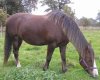
Silver Dapple gene in Arabians

Have also been back now to AL to see if this could be misread. To be honest I don't see how it could. Ambatt has made her (our) take on plum colouring quite clear on AL.

Ambatt posted on the AL thread and posted here for clarification. I know of lots of people who read something on one forum and post on another for more viewpoints; I really don't see the problem. But I am sorry you feel so incensed about it.
 
Just to clarify my position - I used to own Arabs, show Arabs and have some very dear friends on AL including the person who is researching colour inheritance on AL. I needed some expert assistance on colour genetics fron Chev because I doubt the existance of the true silver dapple gene in Arabian horses. I do however own a breed of horse where the silver dapple gene is expressed quite readily.

I am quite within my rights to discuss the issue of the silver dapple gene where I chose - I have not defamed anybody, made derogatory or perjorative comments or made deliberately offensive statements- I would hope that a decent debate would be forthcoming based on scientific principles and rationale.

I was involved with Arabs for over 25 years until I joined the Icelandic lot and was lucky enough to own an Old English/Crabbet plus Polish sabino mare and a Babson CMK mare with the rare seal bay colour.
 
Chev, you might need to email the mods at AL to get your account activated - I seem to remember I had the same problem when I joined.

After going back and checking my posts on AL I found this statement:

"so this leads me on to say that i think this may explain why sometimes a black arab appears unexpectedly. that is, its parent, or parents were genetically black but didnt appear so because of the silver dapple diluting gene, that is, the parent wasnt ee ( chestnut) so could pass on the E gene ( in its undiluted form)"

Is that possible? I thought chestnut was ALWAYS recessive so if any other colour gene was passed on that colour would be expressed. I also assumed black was dominant and therfore unlikely to be passed on as a 'hidden' colour?

You have made me go and look at other Eastern breeds to see if there is any similar colouration which could be 'silver dapple' and thus have an effect on this colouration appearing in Arabians. I cannot.

So I have looked at the Iomud, the Turkomene, the Akhal Teke and the Caspian. No silver dapple colouration pattern, the Akhal Teke show some stunning colours but all appear to be dun/buckskin based with cream. The Caspian breed appears to come in a very limited amount of colours, the most common being bay and brown,black, chestnut and grey, there is also a dun(?) line which is a very specific peachy-apricot colour and I suspect a very ancient colouration pattern. There is no evidence of sabino in this breed which has been subject to much genetic study to establish phenotype.

http://iranzoo.tripod.com/horse/horse.html
 
http://www.turanianhorse.org/colors.html#color

and here again, no evidence of silver dapple colouration. I shall stick my neck out and still say that the colouration in Arabs is a variant liver chestnut. Surely if silver dapple was so rare (it is a beautiful colour) it would be highly prized, therefore documented and depicted? As far as my books show it is not.
 
and as I have posted on AL (this is from the Turanian horse website):

"Until recently it was thought that the Liver Chestnut was a manifestation of Sooty over Chestnut, but since Sooty countershading is uneven over the horse's body and Liver is not, these two colors are probably caused by different genes."

So the plum colouration could be a colour in its own right. Which is far more interesting to my mind. Which means the pedigrees of your mares could be very interesting Chev. I am guessing the Arab part of their pedigree is 1920s to 1930s?
 
ambatt said:
"Until recently it was thought that the Liver Chestnut was a manifestation of Sooty over Chestnut, but since Sooty countershading is uneven over the horse's body and Liver is not, these two colors are probably caused by different genes."

Excellent point! Sooty characteristically adds dark pigment from the topline down, which is why dark bays have paler underparts. Liver chestnuts do tend to have a much more even colour; in fact if anything their colour tends to be darker and more intense on the lower parts of the shoulder and gaskin, which isn't how sooty works at all. Hmm. There's also the fact that some liver chestnuts darken as they get older - it's seen especially clearly in some liver chestnuts who also carry cream (the sooty palominos). One Welsh cob stallion who was born pale palomino darkened so much over his life it's said that he was "palomino that later became liver chestnut" - genetically impossible, but it does show how the darkening can occur. Here's a good example; Aberaeron Idris - you can clearly see how much darker he is on the lower parts of his body too.

The question about 'hidden' black - black cannot be hidden by chestnut, but could I suppose be considered hidden if it's diluted in some way, or modified by something like bay so that breeding bay to chestnut gives a black.

So - using a breed like Icelandics that we know carry silver dapple - if a mare is bay + silver dapple she could easily appear flaxen chestnut, even though she'd be genetically black. If she was bred to a true chestnut stallion with no modifying genes, foal we know would get e from dad, but could get E from mum but no silver dapple or A to modify that base. So you would then get a black foal from what appears on inspection to be two chestnut parents. If I'm right that's how silver dapple was first identified in Morgan horses; testing a stallion believed to be chestnut but throwing black foals to chestnut mares (or something like that). When tested for red factor it turned out he was in fact genetically black not chestnut. I guess that *could* be called a 'hidden' black gene - but black cannot be hidden in the same way that chestnut can truly be hidden by an E gene, or the way bay can be hidden in a chestnut pony. It would be visually hidden, rather than genetically hidden.

Arab blood was introduced several times in Welsh breeding; there was a strong Spanish influence between 1100 and 1500 that included Arabian blood; later in the 1700s TB blood was introduced through a small TB stallion loosed on the hills, and most recently while the sec B type was being established in the 20s and 30s at least two of the Foundation Stock stallions were Arabian bred - one was the son of the Arabian King Cyrus, the other a son of the Barb stallion Sahara.

I'm inclined to agree that this plum colour is a variation of chestnut. There are a huge number of sec Bs which certainly chestnut based but are certainly very interesting shades.
 
Aberaeron Idris is my Welsh Cob ideal! At first glance his colouration appears to be classic silver dapple.

I knew of a partbred Arab mare called Odile (she was registered and was a show winner in the early 70s) who was the same colour is Idris - she too started off as what appeared as 'true' palomino and then darkened to that lovely metallic dark colour. (The non-Arab part of her was Welsh).

To throw a couple of spanners in the works there are a couple of Icelandic colours that are also classed as part of the silver dapple colour range.
 
This is silver bay:
image5RT.jpg


This is bay dun silver dapple
Bleikvindottur-b.jpg


and this is smokey black:
SmokyEye.jpg


(all images copyright Lukka)

So I am now confused on the genetic code that gets bay dun silver dapple - but one gene MUST be Black, but then how is the dilution factor expressed? errrrk!

It never ceases to amaze me how many colour variants there are in the Icelandic. They have been a totally closed herd since the 11th century - so I can only assume that there has been selection for colour as well as gait. As they are a closed herd, it must offer the equine geneticist an absolute wealth of information to study colour inheritance and patterning. The Icelandics also show sabino patterning and the splash white gene, plus tovero and frame overo etc.
 
Here is Lukka's website:
http://www.icelandichorse.is/

To get to her colour section
Click on Icelandichorses at the top of the left hand menu, scroll down and select 'colours' and then marvel at the rainbow hues of my favourite breed.

I also wonder (and this is purely subjective) that the silver dapple colouration only seems to occur in PONY breeds, which means it is linked perhaps to phenotype?
 
Welshies with flaxen manes

Hi, im facinated by this too.

My welsh mare is by Ebbw Amber Flash
http://homepages.manx.net/welsh-cobs/pages/ebbwamberflash.htm
who looks very dark liver chestnut with the flaxen, is this sooty?

My girl is registered as liver chestnut, but has black and grey in her mane. She has no black points - i read that a chestnut can have black in the mane but it's the black points that distiguish a bay from a chestnut. She is sabino too (big blaze onto her chin and high socks).

Is the flaxen mane and tail thing different to the silver dapple gene? and do we know if that only works on black too (ie are they black or bays) or are these chestnut horses genetically chestnut with mane modifiers? does that make sense?

Ive got a stallion for her that is black from black parents and i wonder what from her genes is going to show up, although a black/any! foal would be gorgeous!

- Caroline.
 

Attachments

  • Piru smfile.jpg
    Piru smfile.jpg
    48.5 KB · Views: 12
Hmmm - Santi's lovely Welshie's sire looks to be displaying the plum colour Chev! Indeed, Janton Dictator looks like a 'true' silver dapple.

So the more I think about it, and the more evidence I see, I am convinced that silver dapple in Arabians does not exist.

Edited to add:
Whoever designed the Welsh cob info. resource is a genius - what a fantastic pedigree resource.
 
Last edited:
Bay dun silver dapple would be E (black base) A (bay) D (dun) and Z ( silver dapple). The black base would be modified first of all by the bay gene which limits the black to the points. The bay body colour would be diluted by the dun factor but remain unaffected by the silver gene. The black points would also be diluted by dun to an extent, but would be most affected by the silver, which would lighten the mane and tail to flaxen/silver grey.

Chestnuts are horses whose genes are not able to allow black pigment in the coat; lots have what appears to be black in mane and/or tail but it's not truly black; just very very dark brown. This is Lili, another of my liver chestnuts, who seems to have a black mane; but when you look really closely, it's not truly black.

LlafarLili.jpg


Flaxen is distinct from silver dapple; silver dapple is a dilute gene that acts only on black pigment, so has no effect on red. So a red chetsnut with red mane and tail could carry silver dapple but the mane and tail would remain red because there's no black pigment to dilute. Flaxen (it's believed) acts only on red pigment; a black carrying flaxen would show no visible sign, but on a red mane and tail the colour is bleached out to the distinctive flaxen colour. Flaxen doesn't appear to affect body colour; silver dapple dilutes black body colour to varying degrees.
 
See? This is when I realise my knowledge of genetics is really limited! I was up with it so far but had completely lost the plot on the more complex colours. I have to say you do explain it well Chev.

Still no replies to the AL thread...

So after re-reading the AL thread, I am unclear if they are saying that this plum coloured liver chestnut with silvery-grey IS silver dapple(which it is not IMHO) or if the plum with silver is an EXPRESSION of the silver dapple colouration?

I have looked through all my Arab books and I can not find any evidence of silver dapple anywhere. However, I have found some interesting examples of variant liver chestnut. The shades vary from a rich velvety chocolate (the late Riaz) to a stunning deep mahogany plum with a very bright orange-red mane and tail.(Mehzeer)
 
Last edited:

Okay I'm a little confused by all of this. I don't have the book on me but in Jeanette Gower's book about horse colour genetics I'm pretty sure she talks about blacks as being AaAa genetically, which basically means black is not inhibited at all as it is in other A genes such as AAAa which is a bay horse with black restricted to the points.

The point I'm trying to make here is that I understood that chestnut horses also carried these A genes, but because they are EeEe and don't exhibit black they are only minimally expressed. So a chestnut horse carrying AAAa is your typical standard chestnut while a chestnut horse carrying AaAa is a liver chestnut. Going on this theory I found liver chestnut very easy to understand... but reading all of this I am confused.

What is everyone elses take on this theory?
 
A is agouti, which causes bay. E is the extension gene, which dictates whether a horse can show black or not. A black will be EaEa - carrying A would make it bay.

A restricts black to the points. It doesn't show on chestnuts because they don't have black. A chestnut can be AA (homozygous for bay) but won't show any sign of it at all, because they have no black pigment. The bay gene has, as far as I know, no effect on chestnuts at all; I've certainly known several bright chestnut mares who've thrown bay foals to black stallions.

The thing with liver chestnuts is that the darker colour is uniform on the body; A doesn't give that uniform colour - it does the opposite (restricting black to certain areas).

There are almost certainly more than just A and a at work in the agouti gene; there are also wild bay types, and seal brown horses have also tested positive for bay which suggests more than just a case of simple A and a 'options', if you like.
 
Ambatt, I get more confused as it goes along... try this link for confusing the issue;

The Black Mystique

"Bays are the most common and considered to be the most dominant. These are horses with black points (mane, tail, legs, and ear tips). The Arabian breed contains a certain type of dark brown bay that often masks the black gene."

Bay doesn't 'mask' black at all; it modifies it. You know looking at any bay that it carries E (black) otherwise it couldn't be bay in the first place! Bay *is* dominant to black - not just considered to be. A black cannot carry bay without showing it.

"The Agouti determines the color of horses with black points and blacks, and the Extension, the basis for chestnut."

Hmm. The Extension determines whether or not a horse has a black or red base. Agouti determines whether or not a black base will appear black, or bay of some type. The article is rather misleading.

"Of these breedings, three were known dominant recessive chestnuts."

??? Chestnut is reccessive. It is never a dominant gene. And a gene cannot be 'dominant reccessive'!

"The chestnut genes of the palomino, red dun, and Haflinger all lost to the dominant black."

Palomino: eeCr. As long as the palomino parent doesn't have a bay gene enabled in there, the foal from a palomino put to a homozygous black will always appear black; even if the cream is passed on.

Red dun; chestnut with dun. Again, in the absence of a bay hidden in the red dun parent's genetics, offspring will always be black based. If the dun is not passed on - foal will be black. If however dun is passed on, offspring will be black dun or grullo.

Hafflinger - genetically chestnut with no known carriers of bay. Any foal from Hafflinger x black will therefore be black.

"In stepping out of his own breeding base of Arabian blood, a breed that has been bred along certain lines and strains for centuries, Serr Ebony Star has proven beyond any doubt the existence of dominant black occurring at the extension locus in all horses."

None of these examples prove the existance of a black gene which dominates all; only what chance can do.
 
Aahhhhh - all is clear:confused:
I did start to smell a rat after 'dominant recessive chestnut'
Also as far as I am aware there are only a handful of black Arabians that have been genetically tested to show that they are indeed homozygous for black.

Interestingly my seal bay Arab mare Arami (Bay Aramis x Doosti) had a high proportion of Babson and thus black breeding in her pedigree. Her dam was black (although looking back at her she looked black-brown, but it is difficult to discount the effect of sun-fade.) I have just gone to look through my old stud guides and found an A4 tatty photocopy of Arami. She is certainly seal bay and registered as such, but I also note that her topline and back are darker so is that sooty at work? Her sire Bay Aramis was alleged to reduce white, so a lot of sabino mares were put to him. I do not know if that is folklore or genetic truth, but his get did appear to show reduced white.

I also remember a little black stallion from *Bask lines, he was a bit of a surprise as there was no black in his pedigree for several generations. Can't remeber his name, going to look it up.

Lady Wentworth always doubted the existance of the true black Arab and it has always been a rarity.
 
This link was posted on the AL thread:

http://www.arabianrun.com/arguide.htm

To me it appears to contain misinformation, I am not sure what they mean by
"a parti-color (wildly spotted) horse"

"The true parti-color is hardly ever seen today and is strictly hotblood in origin. Desert Name-Ablak This color is not related to the tobiano or the overo gene groups."

Dredging my archaeological memory I seem to remember Chinese depictions of spotted horses...
and I also remember from my undergrad days that domestication of animals introduces white markings - but I have no idea why.

It is no good Chev, you are going to have to get your registration working for AL!
 
newrider.com