Roan colour changes?

popularfurball

Learning all the time
Jul 18, 2005
12,622
666
113
North west
Can or do Roans grey out/change colour permenantly?

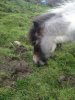
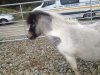
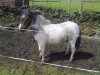
Each spring when rascal changes his coat he seems to go greyer/whiter every year - this year for the first time he has a white stripe down his nose (only white bit on nose/muzzle usually( and has a beard too this year! I'm wondering if he will lose his brown patches in time too? He is either a tri colour that Roans or (from chev!) a bay roan tobiano!.ImageUploadedByTapatalk1399063850.336881.jpgImageUploadedByTapatalk1399063863.916726.jpgImageUploadedByTapatalk1399063882.079459.jpg
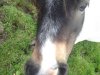
 
Last edited:
Interesting. sorry, no info.

Any reason for the welfare unit visit? Rascal put in a complaint about his mum? :yellowcarded:


Ach they're always there - you know how unloved and abandoned my wild moor ponies are!! Haha. I keep telling him the tale of the boy who called wolf though...
 
You need a genetic expert like Chev! but yes I know some roans, particularly roan skewbalds that turn white grey as do many native duns.


Do you mean they turn that colour when changing coats, or over time they grey out? His summer and winter coats haven't changed much I don't think, but he is definitely getting more and more white when changing coat in spring/autumn especially his head which never used to grey out at coat change?
 
I think any colour can grey out, if they have the grey gene, as grey is an extra gene that acts on the coat colour, it isn't a colour in itself. There used to be a coloured horse on our yard which was completely white by the time I knew him, it was only when he was wet that you could see his skin colour that you saw any dark patches.

However, I thought grey horses usually start greying on the head, especially around the eyes, whereas Rascal's head seems quite dark, apart from the white hairs he's got down his nose. And if he's just getting more white at each coat change it doesn't sound like a typical greying out where the coloured hairs are replaced over time, first by a mixture of black and white hairs, then gradually by just white hairs.

Very unusual, I wish Chev was still around. I wonder how she's getting on.
 
Currently my bay is busy growing a black summer coat. She goes lighter because of sun bleaching. I do wonder if she actually is black. Its definitely black hairs coming through.
 
Currently my bay is busy growing a black summer coat. She goes lighter because of sun bleaching. I do wonder if she actually is black. Its definitely black hairs coming through.

Depending on how much sun he gets, Shadow goes almost black in the winter, then bleaches out in the summer. This year his coat started coming through blotchy, then black, and his winter coat has turned almost white where it roans out on his loins and flanks.
 
Yes I have had roans and piebalds grey out completely
Remember Freddie the frog. He was a grey roan piebald and he went white
 
hmm interesting, will be watching this thread,

I think Red has definitely got more grey over the past few years, though not by much


Roaning due to Leopard Complex, Sabino, Rabicano and other KIT gene mutations can roan out more and more as time goes by but generally true or classic roans don't. They often change colour with the seasons
so that they are darker in winter and lighten out again in spring. This is thought to be due to the type of coat they have; the longer guard hairs of the winter coat are less affected by roan than the short summer hairs. They also have corn marks - this is where when the skin is damaged instead of the hair growing back white as it would on a solid base it grows back as the base colour. One last marker is V-shaped marks on the knees (except that Rascal has white knees so you won't see that!) Rascal is definitely tobiano -hence the splodges - and definitely roan; his head would have greyed out before the rest of him otherwise. How old is he now? It's always possible he's got grey going on there to but I don't think so looking at those pics. Monty on here used to have a black roan tobiano mare - I'll ask if I can post some pics to show you what I mean.

Red is not a true roan; that looks like rabicano to me. Am I right in thinking he has a skunk tail? (White at the top of his tail)
 
  • Like
Reactions: popularfurball
Roaning due to Leopard Complex, Sabino, Rabicano and other KIT gene mutations can roan out more and more as time goes by but generally true or classic roans don't. They often change colour with the seasons
so that they are darker in winter and lighten out again in spring. This is thought to be due to the type of coat they have; the longer guard hairs of the winter coat are less affected by roan than the short summer hairs. They also have corn marks - this is where when the skin is damaged instead of the hair growing back white as it would on a solid base it grows back as the base colour. One last marker is V-shaped marks on the knees (except that Rascal has white knees so you won't see that!) Rascal is definitely tobiano -hence the splodges - and definitely roan; his head would have greyed out before the rest of him otherwise. How old is he now? It's always possible he's got grey going on there to but I don't think so looking at those pics. Monty on here used to have a black roan tobiano mare - I'll ask if I can post some pics to show you what I mean.

Red is not a true roan; that looks like rabicano to me. Am I right in thinking he has a skunk tail? (White at the top of his tail)

It was more because he has grown this white beard this year - whereas his face hasn't ever gone white before during his "roan phase" so wasn't sure why he suddenly temporarily greyed on his face for the first time - and quite dramatically. He is ten next week
 
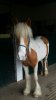
Can i hijack pfb please and ask chev what kind of parents might Neala have had please? I dont know anything about them but would love to know possibly what colour her parents might have been to get her colours? She also has 1 blue eye if that makes any difference i wouldnt have a clue! This is her.neala01PicsArt_1400956448128.jpg
 
Can i hijack pfb please and ask chev what kind of parents might Neala have had please? I dont know anything about them but would love to know possibly what colour her parents might have been to get her colours? She also has 1 blue eye if that makes any difference i wouldnt have a clue!

She's got a chestnut base so both parents have at least one copy of e (red) which they have both passed on. So we know she's ee - chestnut. Parents could both have been bay, black or chestnut - all we know is that they both had at least one copy of e.

The white splodges are tobiano - that causes patches of white on a base colour. So again, we know that at least one parent was tobiano too. But the markings on her nose and the blue eye makes me think she might be carrying splash white too. That causes big white faces and blue eyes.
 
Can I hijack too please and ask chev a question?
Should a Haflinger have a dorsal stripe? and what causes it?
 
Dorsal stripes are caused by one of two things; carrying the dun gene or countershading. A proper dun stripe will look like it's been drawn on in felt tip pen; it'll be the colour of the base coat and it will usually be accompanied by other dun factor markings. So a chestnut dun will have a peachy body colour and a chestnut dorsal stripe; a black dun will have a sort of slate grey body and a black dorsal stripe and so on. Dun dilutes both black and red pigment s it can't hide. Countershading is nothing to do with dun; it's when there is darker pigment along the spine and can be nothing more than a stripe or go right down the body so you get a dark bay for example.

As far as I'm aware there's no dun in Hafflingers; they are all flaxen chestnut.

There is a test for dun now, thankfully - some pseudo duns can be very convincing!
 
newrider.com