Increasing Circulation in Feet

hb-suds

New Member
Jun 17, 2008
24
0
0
Highlands
Hi All

New to this so bare with me. I'll try and cut the long story, short...
I'm posting this in Horse Care also.

My mare (Welsh D) had laminitis 10 years ago (3 owners prior), and thankfully has never had another attack, if she did it really would finish her off!! When I bought her 2 years ago, I was fully aware of her problems. Her previous owners never got x-rays taken or tried remedial shoeing. The first thing I did when i bought her was change farrier and got the x-rays taken. The vet and 2 farriers opinion was that they're was no way this horse could be sound, although she frequently did pleasure rides and was trotted up before and after each ride with no problems. Her soles are extremely flat (the pedal bone had rotated significantly), and the toes really flared. The toes were completely cut back. We've gone from heart bars, with and without sole pads, sport imprints (she loved them, we used them for 6 months but toward the end she was pulling them off within a week), now we're back to NB with a frog support.

She is looking and feeling the best she ever has, but when trotted up on tarmac, she has a slight nod on her, only very slight but it's there, but trot her on softer ground and she's off. My farrier says this is concussion, it's always on her off side, which is the worst one of the 2. I contacted trinity consultants, and Roger thinks this is lack of circulation.

I know to increase circulation shoes should be removed, but it has been said she will always need frog support, so this is out!! And without shoes she would hobble over stones!!

Supplements - I've used in the past, Surefoot, Biotin and a Seaweed general supplement. And I always use Magnesium Oxide. I contacted Silver Lining Herbs, and they suggested that she may have a thyroid problem, as she is a good doer in summer, obviously on restricted grazing, but in winter it's hard to keep weight on her. She does build up fat on her crest and around her bum. So we're trying out a supplement for this, too soon to say. It's all trial and error with her!!

She gets bruised soles easily, and I normally give her some arnica for this. I use Magnetic Bell boots and cornucrescine on the bands to increase circulation. I ride her on the beach a lot, and travel 70 mile round trip just to get some soft hacking for her.

I've given up the endurance with her, I know she loves it, but when the adrenaline is pumping, she shows no signs of unsoundness until after the ride.

The vets and farriers opinion is that it's all the work she's getting thats keeping her going, as it's increasing her circulation. So she will be ridden for as long as she is happy.

She is happy in herself but just want to try and do more for her. There must be more out there that are experiencing or have experienced the same problems as me and am just looking for more suggestions or ideas to try??

Thanks in advance for responses
 
Hi,

Firstly, pics would greatly help us be able to give you more specific info. Take pics of her feet on firm ground from near ground level, squarely front- & side-on. Sole pics should include one sighting down from heel to toe, to get an idea of depth & heel height.

The vet and 2 farriers opinion was that they're was no way this horse could be sound, ....The toes were completely cut back. We've gone from heart bars, with and without sole pads, sport imprints (she loved them, we used them for 6 months but toward the end she was pulling them off within a week), now we're back to NB with a frog support.

Why did the 'experts' say there was no chance of soundness? Has she lost the tip of her coffin bone or such because of the founder? The toes being cut back would have been one necessary step, but what was done with the rest of her feet? Interested to know why you say she loved the Imprints? What did she do differently? Regarding pulling them off, alas, that's likely a fit/trimming prob.

I know to increase circulation shoes should be removed, but it has been said she will always need frog support, so this is out!! And without shoes she would hobble over stones!!

Have you heard of hoof boots?? IMO this is the perfect answer, esp for foundered/footsore horses. She will get hoof protection, added 'shock absorbtion - which shoes reduce, added flexion & if her heels are still too high, you can use frog support pads inside them. You also only need use them when you need to use them, rather than 24/7. Also potentially cheaper if you're still at the stage of her needing frequent trimming to change chronic hoof form probs. Regarding 'always needing frog support', without even seeing her feet, it's only an educated guess, but I wouldn't think that's likely. It may be for a bit tho, until you can get her heels down as low as they need to be.

Supplements - I've used in the past, Surefoot, Biotin and a Seaweed general supplement. And I always use Magnesium Oxide.

I advise getting a diet analysis done & feeding a *good* complete supp. I am a subscriber to a program/service called FeedXL.com & I've actually saved money, as well as got my horses healthier & cut out the headaches of not knowing what supps, thru this site. If you choose something such as this, or to consult an equine nutritionist, I would use an independent source, rather than one working for or affiliated with a feed co.

What else does she get fed? Biotin & magnesium are essential ingredients for hoof health. But they are just 2 ingredient & *well balanced* nutrition is just as important as providing the ingredients. That's why I advise diet anal. & complete supps. If your horse is getting enough green forage, then she is probably already getting enough biotin, for eg. Seaweed is high in iodine, also a necessary ingredient, but it is so low as to be negligible in the multitude of other nutrients it contains. Too much of a nutrient can also create similar probs to a deficiency & iodine effects the thyroid too.

She gets bruised soles easily, and I normally give her some arnica for this.

She gets bruised soles because they are so thin & low. It's best to avoid this, as sole bruising can easily become abscessing, which will set back her rehab. You need to protect her soles, which conventional shoes don't do. Again, hoofboots are generally the best option.

The vets and farriers opinion is that it's all the work she's getting thats keeping her going, as it's increasing her circulation. So she will be ridden for as long as she is happy.

Yep, exercise is certainly one of the big factor in circulation, hoof growth & therefore rehab. The more the better. If you haven't already, check out hoofrehab.com and also safergrass.org which will give you lots of info.
 
Hi Wundahoss

Thanks for your response, answers below:

the x-rays showed significant rotation, more so on the off side foot. From bone to hoof wall was a massive void, best way to describe it is like ski jumps. when we first cut the toes back, we were unsure of what we would find in this void. Thankfully it was dry and made it easier to keep clean, as it was winter when we did this. I volunteered Jazz for the demo day for the farriers when Andrew Poynton (Imprints) was in the area. I liked them as they gave her far more grip (before that we were in heart bars and sole pads), and as they were thicker than heart bars they gave her soles far more clearance from the ground, and so much lighter than the heart bars. the best way for me to judge how Jazz is doing is by how she feels when ridden. She felt a lot more confident in the Imprints, stonier ground didn't bother her at all. We got them first fitted in Nov and only went back to steel in June. They stayed on for 6 weeks each time but the last 2 sets she kept pulling them off in the field, and the only thing we could come up with was due to her pacing and twisting on them. They never came off when ridden.

Have considered boots before but it's trying to find the right fit for her. I spoke to my farrier and said i wanted to stay in the Imprints indefinetly until she started loosing them. We've gone back to steel until we can think of what next to do. When Andrew Poynton came up, my farrier took all of Jazz's xrays, and her case study on her (she takes photo's at every shoeing and a description of how she's doing), and he was very impressed at the progress she has made, and told me I had the best farrier for the job. It was Andrew who said she would always need some form of frog support.

With regards to supplements, I always gave her D & H Surefoot, when the toes were cut back I added extra Biotin. She used to get Bailey's Lo cal balancer but 2 winters ago, she lost a lot of condition, so I stopped using this. Her soles also went incredibly soft, as it was winter the most obvious thought was ground conditions, but even when moved into a dry field it took several months for her soles to harden so can't help but think this was more mechanical than just ground conditions, but this is also when she lost all the condition somore probable this had a lot to do with it.

Over the winter, she gets Hi Fi Lite, High Fibre nuts, Sugar Beet, and Soya Oil, if i feel she needs it and as much hay as she wants (struggle to keep the weight on her). I started using the Seaweed as her balancer, it's actually called Herbal Hoof, and contains other ingredients. I give her this as she doesnt' get anywhere near the recommended amount of nuts. I didn't really see a significant difference with the surefoot, I used it for 2 years, and only stopped a few months ago. I've also stopped using the Seaweed as she's on grass just now.

Just now she just gets a handful of Hi Fi to get her supplements into her. I've gone to a few different herbal specialists and seem to get told conflicting advise, and am struggling to find someone impartial, as at the end of the day there all selling something. Where i used to get the Seaweed etc from, agreed with what i was giving her, Biotin, Herbal Hoof, and Mag. I went to someone else, who suggested 2 supplements to give her, one of which has to be taken with Oats for it to work, which i couldn't even contemplate doing for the sake of the laminitis. Another one suggested a thyroid problem which we're trying along with the laminae support. I'd also thought about getting hair analysis done to see if this will show a deficiency, but don't know anyone who's tried this. Do you have any experince with this? It's also been suggested Insulin Resistence. I will certainly have a look at that website FeedXL.com.

Bruised soles used to occur when doing the endurance. she can be a wee bug*r at times, and if she saw a horse on front of her, would be straight after them, a few times i had no brakes at all, and with the adrenaline pumping she wouldn't feel a thing until after. I've now stopped doing the rides, we go off to different places and meet different horses and we can choose our routes now so avoid all stoney ground. Yes soles are very low, although they is slightly more concavity from what there was 2 years ago. And are really firm compared to what they used to be.
When they were soft we went for the sole pack too, the only downside then is if no air getting to them may be contributing to them being soft.

I'm interested if you have had a similar experience??

And any other thoughts you may have??
 
Will get photo's today for you, of how she is now. Unfortunately i don't have any before we started, but below is after she got the toes cut, not sure if it will help you or not?

DSCN0554.jpg


DSCN0553.jpg


DSCN0550.jpg


DSCN0549.jpg


DSCN0548.jpg
 
Oh, I didn't realise you meant resectioning, when you said 'toes cut off'. How long ago were these pics? Not ideal pics, but while her toes were cut right off, it's unclear if they have begun correcting her very high heels? How are they now? Have added some lines to your pics, to show the angles I guess the pedal bones are. As the vet/farrier should have told you, they need to be close to ground parallel & they are obviously very far from it. For this to change, the heels need to come down drastically. I've mentioned before, this needs to be done gradually, over at least a few trims, as the interior of the hoof needs time to adjust.

Have considered boots before but it's trying to find the right fit for her.

That fit is probably going to change too. You may need one size now for only a month or few & then you'll need a different size. Luckily you can buy/swap/sell secondhand boots pretty readily, as there are many that need boots only for short term, or for rehab such as yourself. Someone on here was also talking about their local tack shop hiring them too. Original Easyboots aren't that expensive & Easycare also have a new type called 'gloves' which aren't too expensive. They also have a 'fit kit' so you can try before you buy. If you do get a hcp out, find out if they can bring a selection of boots. There's also a product called 'sole guard' by Vettec which I've heard lots of good things about, but I have no experience of it myself. I think boots would be the better alternative if possible.

It was Andrew who said she would always need some form of frog support.

I may have been unclear about that subject. I agree wholeheartedly that frog support/stimulation/pressure is absolutely necessary. When I said that it will likely not always be necessary I meant *artificial* support with pads & the likes. With the right treatment, her foot *should* change so that the frog can get it's 'support' from the ground as it is meant to. With regard to stone bruises & flat soles, the soles also need to be able to support the horse and get support from the ground, so forcing the hoof walls to support the whole horse(putting more stress on weak laminae) & keeping the sole away from the ground further is not helpful. The soles will certainly also need to be protected too tho probably for a fair while, as they are so thin & flat. With more use, they will thicken & strengthen.

With regards to supplements, I always gave her D & H Surefoot, when the toes were cut back I added extra Biotin. ...

I'm no kind of expert on that subject. I've only 'home studied' equine nutrition, but have a friend who's an equine naturopath & have what I now feel is an essential(and cheap!) service for diet/feed analysis and email consults with an equine nutritionist. It's FeedXL.com & I'm sure there must be other similar services about to choose from too. There is also a forum, newsletters & articles about research on feed & nutrition. Pete Ramey has some info on his site about diet as relates to the hooves & feeding lami-prone horses. He also has links inc. to safergrass.org which has lots of info & you can write an email to them for more advice.

I started using the Seaweed as her balancer, it's actually called Herbal Hoof, and contains other ingredients. I give her this as she doesnt' get anywhere near the recommended amount of nuts. .... I've also stopped using the Seaweed as she's on grass just now.

Oh, I thought you meant straight seaweed. May well be a good balance if it's just one ingredient in the supp. Grass is very unlikely to provide her with good nutrition, so I'd keep up with a good supp. I would guess she wouldn't get good enough nutrition from the 'nuts' even if you fed her a double ration. From doing copious analysis of feeds & supps with the help of FeedXL I found that despite the lables, the vast majority of products(feeds as well as 'complete' supps) aren't anywhere near good, well balanced nutrition. I found that you also tend to(not always, there's expensive crap too) get what you pay for. The 'ration balancer' I give my horses is $170/20kg bag:eek: I nearly fell over when I learned that, almost didn't even consider it. But upon analysis, I only needed to give my guys a bit more than half of what was recommended on the package... amounting to only 60g for the horses, 35g for the pony per day! So despite the initial outlay, it's actually economical & lasts for ages!

I've gone to a few different herbal specialists and seem to get told conflicting advise, and am struggling to find someone impartial, as at the end of the day there all selling something.

Isn't that the crux of the matter??:rolleyes: If only we could find just one trustworthy opinion! That's why I think it's so important that we educate ourselves as much as possible on important matters, so that we can at least know enough to work out which 'experts' to listen to. Unfortunately I can't see any shortcuts to learning all we can & then making our own informed decisions.
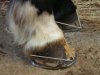
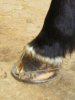
I'd also thought about getting hair analysis done to see if this will show a deficiency, but don't know anyone who's tried this. Do you have any experince with this? It's also been suggested Insulin Resistence.

Haven't done hair or blood on my boys, because it's very expensive here. I'd like to tho, as of course that would give an accurate picture rather than second guessing. If it's not so expensive there, or you can afford it, I think it could be helpful but probably not necessary. Testing for insuline resistance or cushings would definitely be worthwhile IMO.

I'm interested if you have had a similar experience??

Not personally with conventional treatments & shoes, but it was a severely foundered pony & my donkey that I'd had since I was 5yo that got me learning about all this stuff in the first place. They were both in their 20s, pony had typical, terrible 'ski feet' & pronounced 'incurable' by a number of 'experts' and donk had been on permanent pain killers for some years, but the 'experts' had told me it wasn't his feet, they were OK for a donk.... Until I started learning & when I asked my first teacher about donkeys & she said something like 'in principle, a hoof's a hoof' I knew we were in trouble - his feet hardly resembled hooves! He was also so rotated the tips of P3 had penetrated his sole! Anyway, long story short, after around 6 hard months, they were both well on their way to recovery, donk off the pain meds. His feet never became great, but he did live out the last decade of his life sound & happy, died two years ago.

That's when I started learning more & trimming my other sound horses.... I've been doing it professionally for about 10 years now, and have successfully worked with quite a few badly foundered horse, among other probs. I've removed 'corrective' shoes on a few occasions, worked with 2 other 'lost causes' according to vets & farriers. I'm not silly enough to believe that I can fix any horse or any problem by any stretch, but touch wood, I've been lucky & only had one that didn't come good, and xrays showed he'd lost about a quarter of his pedal bone before I met him.
 
These photo's were taken nearly 2 years ago.

I've got ones that i took from yesterday which are all loaded onto another thread, here's the link

http://www.newrider.com/forum/showthread.php?t=198723

Let me know what you think?

I'm due x-rays again next month. I take her into the vets, it's only a 20 min drive for me, and they develop the x-rays there and then, and farrier normally comes too, so I think this will be the best time to tackle vet and farrier, as to where we go from here!!

Yes feed and supplements a complete mindfield, particularly when you get told different things everywhere you go. Will post another thread on horse care to see if anyone can reccommend an impartial nutritionist.

I am fairly novice. Grew up with ponies and horses, and due to family circumstances had to give them up. Only went back to it 5 years ago, after a 15 year break. I started excercising Jazz for a woman who lived not too far from me. It was mostly through convienence for me, as I couldn't commit financially and time to one of my own. When I first started riding her she was a complete plod, but was always stubborn and wanted her own way, had 2 hard years of napping. And then when she said she was going to sell her, couldn't bare the thought of anyone else having her. She is a completely different pony now. Her stride is now massive, she used to take choppy short steps. She now loves her work, and is so forward going. she looks magnificant when she's out, and is such a joy to ride and own. She is such a determined wee thing, and I just think it's more than overdue that someone invests there time and money into her, she is such a character and is truely loved by all who meet her.

Just want to do the best for my girl. Let me know your opinion of her feet now, I know how bad they look. But at 17 I just don't want her out of work. I know trimming and farriery are completely different, but not sure how i will approach the subject with my farrier. She has been so dedicated to Jazz over the past 2 years. Someone on the other thread recommended barefoot trimmers that are not all that far from me (i'm in the north of Scotland and we are quite limited up here for whats available), but your honest opinion would be much appreciated, and even if you can go into detail of how you would go about trimming her (I know probably very difficult without viewing the x-rays and actually seeing her), but want to try and gain as much knowledge as i can, for her sake.

Looking forward to your response!!

Cheers
 
Hi,

You will have got my reply on the other thread, but regarding what you've said here....

Regarding how to tackle the subject with your farrier, perhaps if you studied hoofrehab.com etc, decided whether you agreed with it, then printed out relevant info & gave it to your farrier, saying that you would like to try to treat her that way and would like her to do it, if she's happy to learn how??

Regarding her previous 'stubborn' 'plodding' 'nappiness' & choppy steps, yep, not the least surprised at that, considering how her feet must have been hurting her & how high her 'stillettos' were!

Regarding specifics of trimming, there are lots of principles to follow, but as with most things, few if any hard & fast 'rules' that should never be broken. So... very basically, I *probably* wouldn't be touching any sole material. Definitely not in the front half of her foot. I would be continuing to lower her heels as quickly as possible, until you've gotten her hoof capsule following the angle of the pedal bone. I would trim any bulbous or daggy bits of frog, open up the central sulcus to help prevent/treat thrush. I would however, trim the frog as little & as infrequently as I could get away with. I would keep the toes 'backed up' to within a quarter inch of the *true* sole(there may still be some lamellar wedge that may make that a little unclear). I would keep the entire wall level at the ground surface with the outer rim of her soles for now, but give them a very strong 'mustang roll' all the way round.

Clear as mud??
 
newrider.com